Designing interactive games for young children: Puzzle Toys

How do specific features of toys and games influence children’s effort and motivation?
Designing Puzzle Games for Kids

Project Overview
Role: Project Lead, end-to-end research
Methods at a Glance:
- One-on-one interviews (in person)
- Usability testing (ages 4-6, at a children’s museum)
- A/B testing
- Statistical analysis (R: ANOVA, regression)
Challenges:
- Short attention spans: young children (4 to 5 year olds) have short attention spans
- Child appropriate user interface: needs to be appropriate for young children (e.g. robust to frequent and random tapping on the screen, clear instructions, engaging)
- Kid-friendly usability testing
- Adult Influence on Play Behavior: consider how adults influence children while playing games
What We Learned About Designing for Young Children
This project explored how different toy features and adult interactions shape children’s persistence and play. Based on usability testing and A/B comparisons with 4- to 6-year-olds, here are our key design takeaways:
1. Encourage exploration through variety
Include multiple affordances (e.g., buttons, lights, movable parts) that allow for different combinations. Kids engage longer when there are diverse, interesting ways to interact.
2. Nudge kids beyond repetition
Children tend to repeat the same actions. Use feedback, subtle cues, or playful surprises to encourage them to try new things.
3. Make complex actions discoverable
Multi-step or less obvious combinations (like pressing buttons simultaneously) were rarely attempted. Design for gradual discovery—use sound, light, or interaction loops to invite deeper exploration.
4. Delay help to support persistence
When adults offered help too soon, kids gave up faster and explored less. Let kids struggle a bit before support appears. Optional, child-initiated help keeps curiosity alive.
Here’s some more detail on the design and testing process:
Problem Space & Desk Research
(literature review)
We’re exploring what affects how much effort kids put into different types of games. Our first step is to design a range of games for 4- to 5-year-olds that tap into different kinds of motivation—like wanting to solve a puzzle or being willing to work hard at something.
We are also interested in examining how different formats, like games presented on an iPad versus those involving physical objects, affect children’s engagement and play behavior.
Prior research has shown that factors such as observing adult behavior, the availability of information to be gained, and the ability to view puzzle solutions all impact persistence among children and adults when interacting with novel tasks (Leonard et al., 2017; Leonard et al., 2021; Risko et al., 2017; Ruggeri et al., 2024).
Usability Testing
One on one interviews with children to examine how kids approach the game, their time on task, their ability to work independently, and overall enjoyment.
We ran usability testing with kids ages 4 to 6 at children’s museums. We set up a table and invited kids to take part. Each child got a puzzle box and was told it could play music—then we let them explore and figure out how to turn it on.
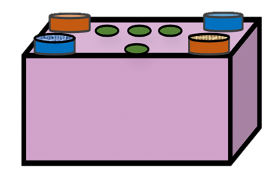
We first imagined the toy as a puzzle box with a mix of physical features—like buttons, lights, and spinning pieces. This design let kids try out lots of different actions, from pressing individual buttons to pushing multiple buttons at once or moving pieces around in different ways.
Based on our early sketches, the final toy design was a small, lightweight box that kids could easily pick up and play with.
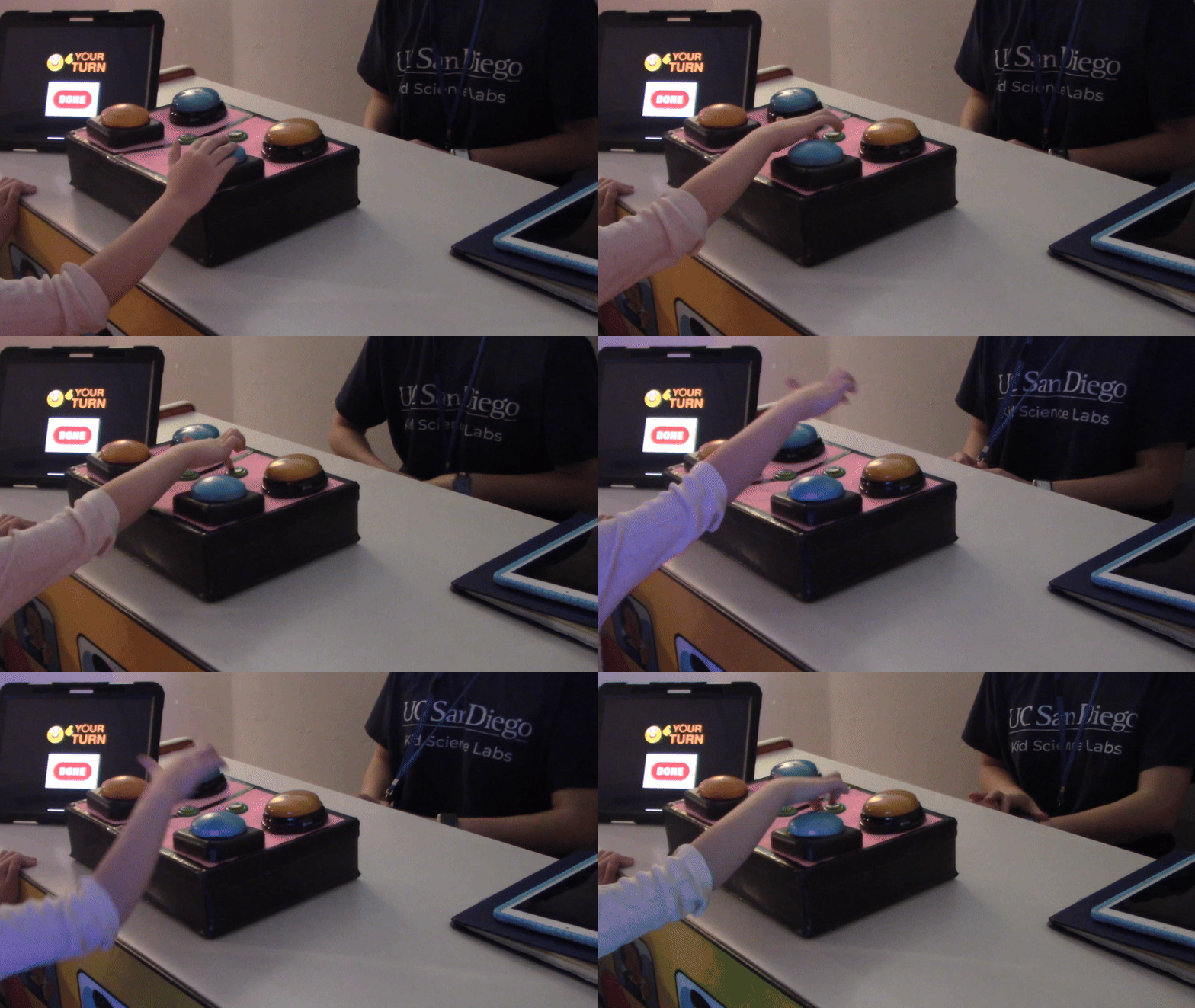
Measurement: We gathered data on how long children played with the toy, what actions they took, questions they asked, and how many unique combinations of buttons they tried.
Findings & Design Recommendations:
- Include multiple affordances that allow for varied interactions – kids engage longer when there are more possibilities to explore.
- Kids often repeat the same sequence of actions, so designs should subtly encourage exploration and variation.
- Complex or less obvious combinations (like pressing multiple buttons at once) are rarely attempted without prompting—consider ways to guide or reward discovery of these features.
A/B Testing
Once we had a working design, we wanted to understand what affected children’s effort and persistence. We ran A/B testing to compare how long kids played and the different ways they interacted with the toy across two versions of the setup:
- Version A (Moderator Offers Help): The moderator told the child that they knew how to turn on the toy, and that the moderator could show the child if the child decided to stop trying.
- Version B (No Help Available): The moderator didn’t offer any help and simply told the child the toy would be put away whenever they were ready to stop.
Findings:
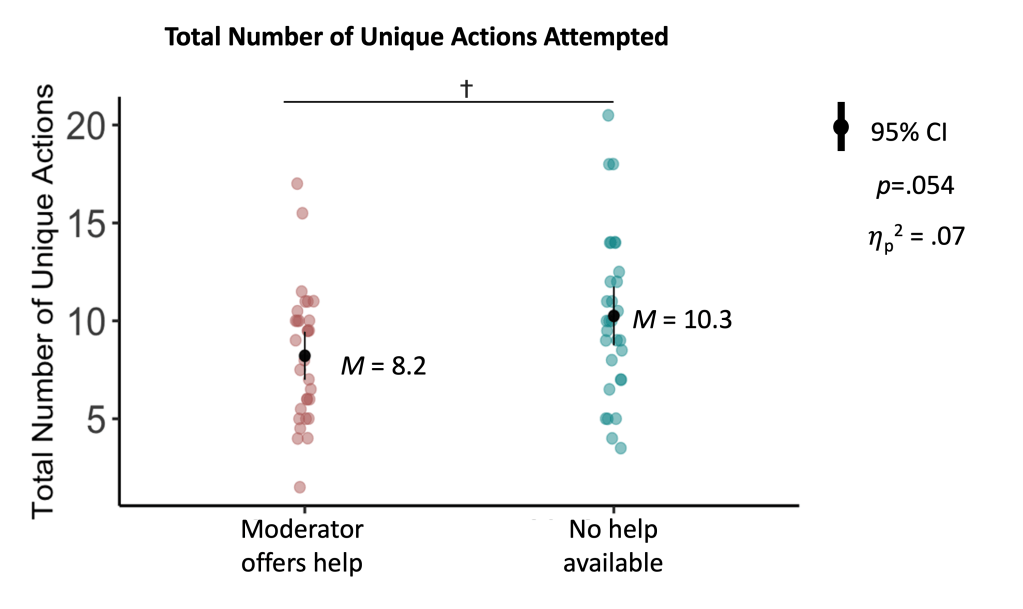
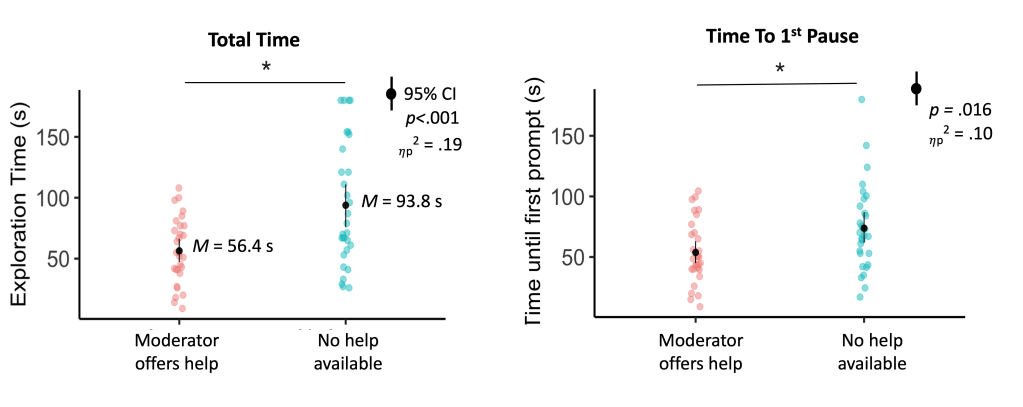
 Alex Rett